
What Are Data Centers?
Data centers are large, industrial-scale facilities that house servers and digital infrastructure used to power cloud computing, artificial intelligence, streaming services, and other online platforms. In recent years, their size and number have expanded rapidly, with massive warehouse-style buildings being proposed and constructed across urban, suburban, and industrial areas nationwide. These facilities require enormous amounts of electricity and water and often operate around the clock, relying on extensive cooling systems and backup generators.
As data centers proliferate, they raise growing concerns about land use compatibility, cumulative environmental and public health impacts, infrastructure strain, and whether communities are being asked to absorb long-term costs for limited local benefit.
Project Introduction
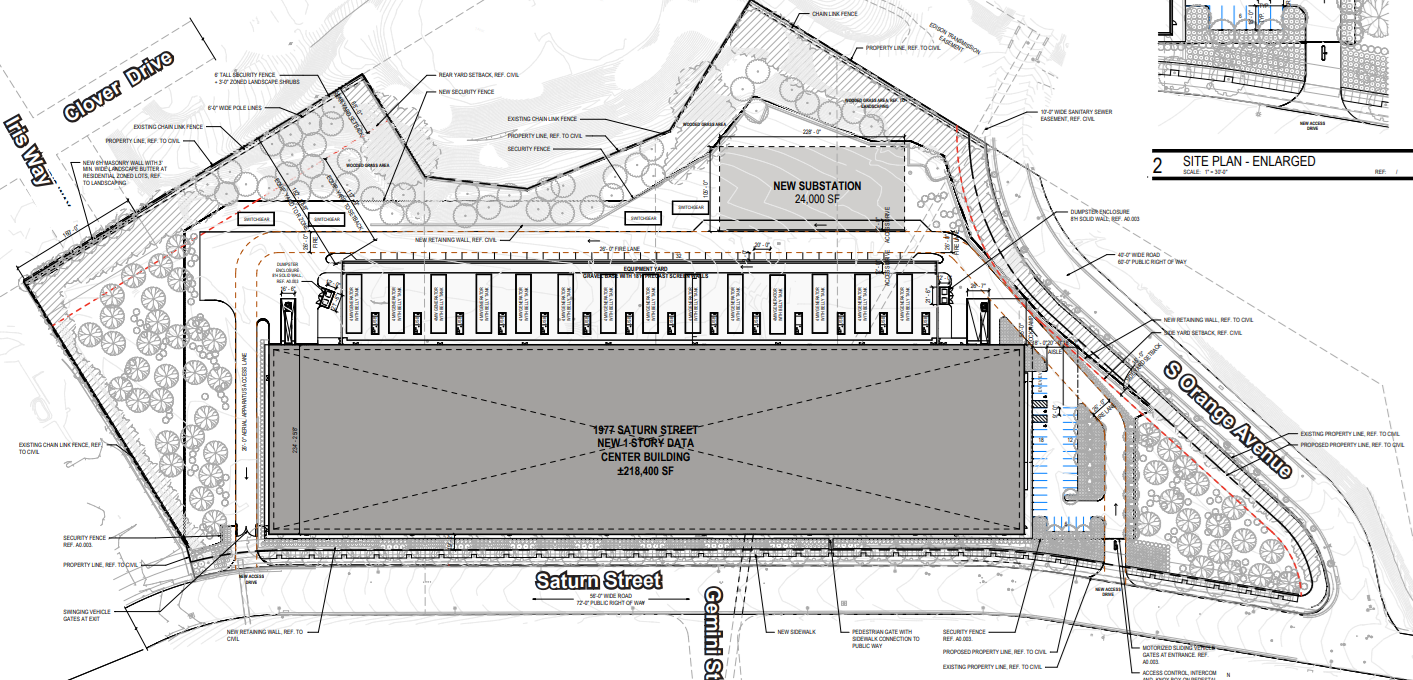
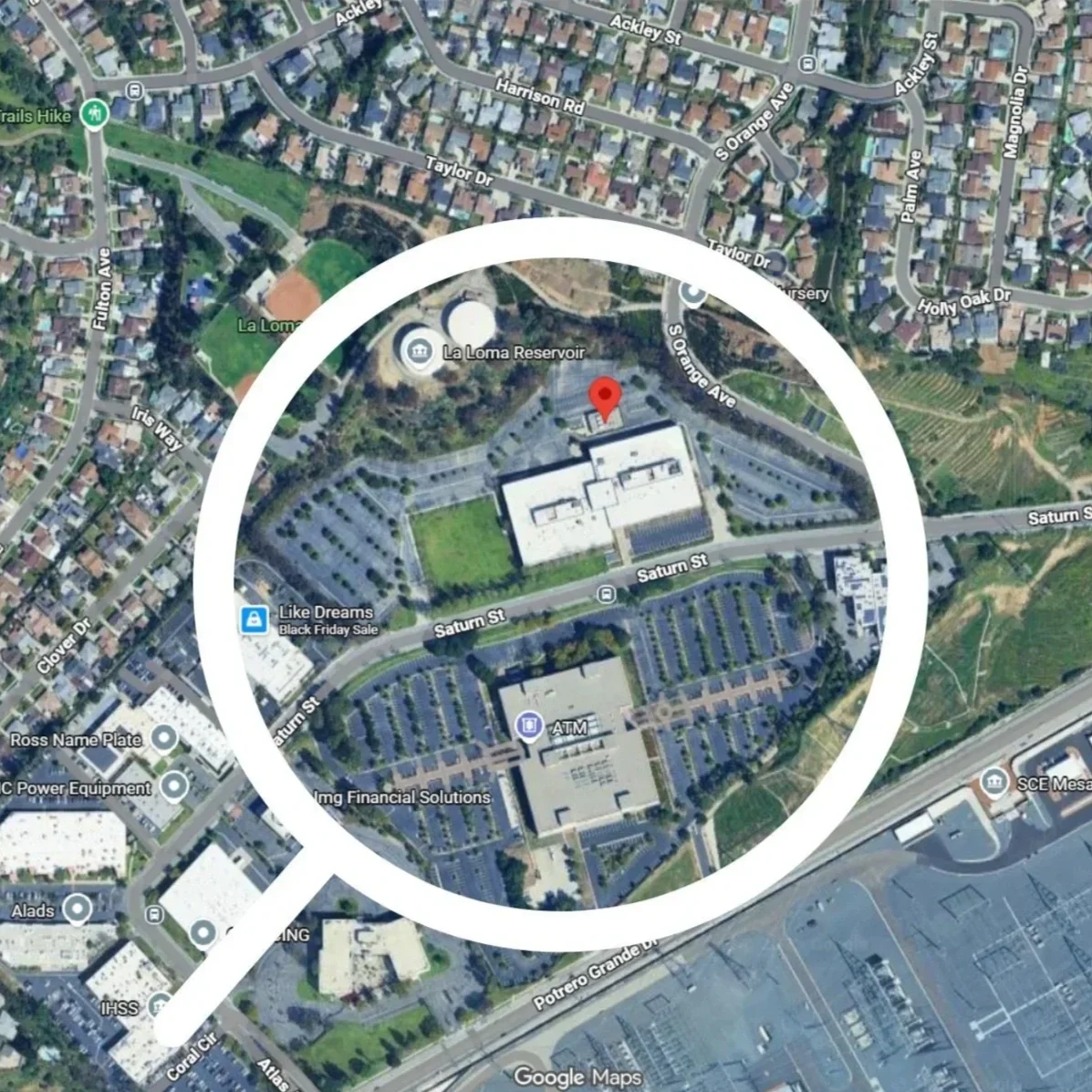
In January of 2024, a private Australian developer, HMC StratCorp (the Applicant), with their subsidiary DigiCo REIT, proposed building a hyperscale data center. This is a facility housing computer servers to be used to train AI, among other uses, at 1977 Saturn Avenue in Monterey Park. The project would operate 24 hours a day, 7 days a week, 365 days a year.
On October 31, 2024, HMC submitted an Initial Study (IS) and Mitigated Negative Declaration (MND) for this data center. In response to some feedback received on December 2, 2024 from organizations like Advocates for the Environment and others, HMC submitted revised technical details with design enhancements on October 27, 2025. The IS/MND is a streamlined environmental review process that allows projects to move forward quickly, but only if all impacts are deemed "less than significant." For a facility of this scale, that conclusion deserves scrutiny.
The applicant's consultants prepared the IS/MND. They chose the assumptions, set the study boundaries, and selected the comparisons. Not surprisingly, they concluded their client's project poses no significant impacts. But "less than significant" is a legal threshold, not a measure of whether there are actual impacts or whether real people will be affected.
Thresholds are imperfect measures of experienced reality.
They are often arbitrary: Noise limits (54–56 dB) are set for regulatory convenience, not based on health research about sleep disruption or stress.
They may be outdated: Air quality thresholds don't always reflect current science on cumulative health effects.
Impacts below thresholds still cause harm: A continuous 50 dB hum 24/7 may comply with the law but still degrade quality of life.
"Mitigated" ≠ "Eliminated": Sound barriers reduce noise; they don't make it disappear. Biofiltration treats stormwater; it doesn't purify it.
What is being proposed?
Location
1977 Saturn Avenue, Monterey Park, CA
Property/Lot Size
218,400 square feet (~4 football fields)
Peak Power Capacity
49.5–50 megawatts (MW)
Main Power Supplier
Grid service through SoCal Edison (SCE)
Backup Power
24 Tier 4 diesel generators
Cooling
23 rooftop chillers with a closed-loop water system
Timeline
Application submitted January 2024; hearings postponed indefinitely due to public pressure
Estimated Demand:
Annual electricity use
~434 GWh/year
Equivalent to ~40,000 households
Annual water use
12 million gallons/year
Equivalent to ~120 households
Annual greenhouse gas emissions
77,034 metric tons CO₂e
2027 estimate; assumes SCE ⅔ grid carbon mixThe following figures come from the Initial Study (IS/MND) prepared by Kimley-Horn on behalf of the applicant. They are modeled estimates, not independently verified measurements.
Annual city tax revenue
~$5 million
~3% of total City revenue
Obtained from Century Urban Strategic Real Estate Advisory Services: 1977 Saturn Data Center Fiscal Revenue Analysis, August 12, 2025 [pages 333-347]